
11 min• 01.04.2026
How to organize a football tournament? A step-by-step guide
By Dawid Pątko
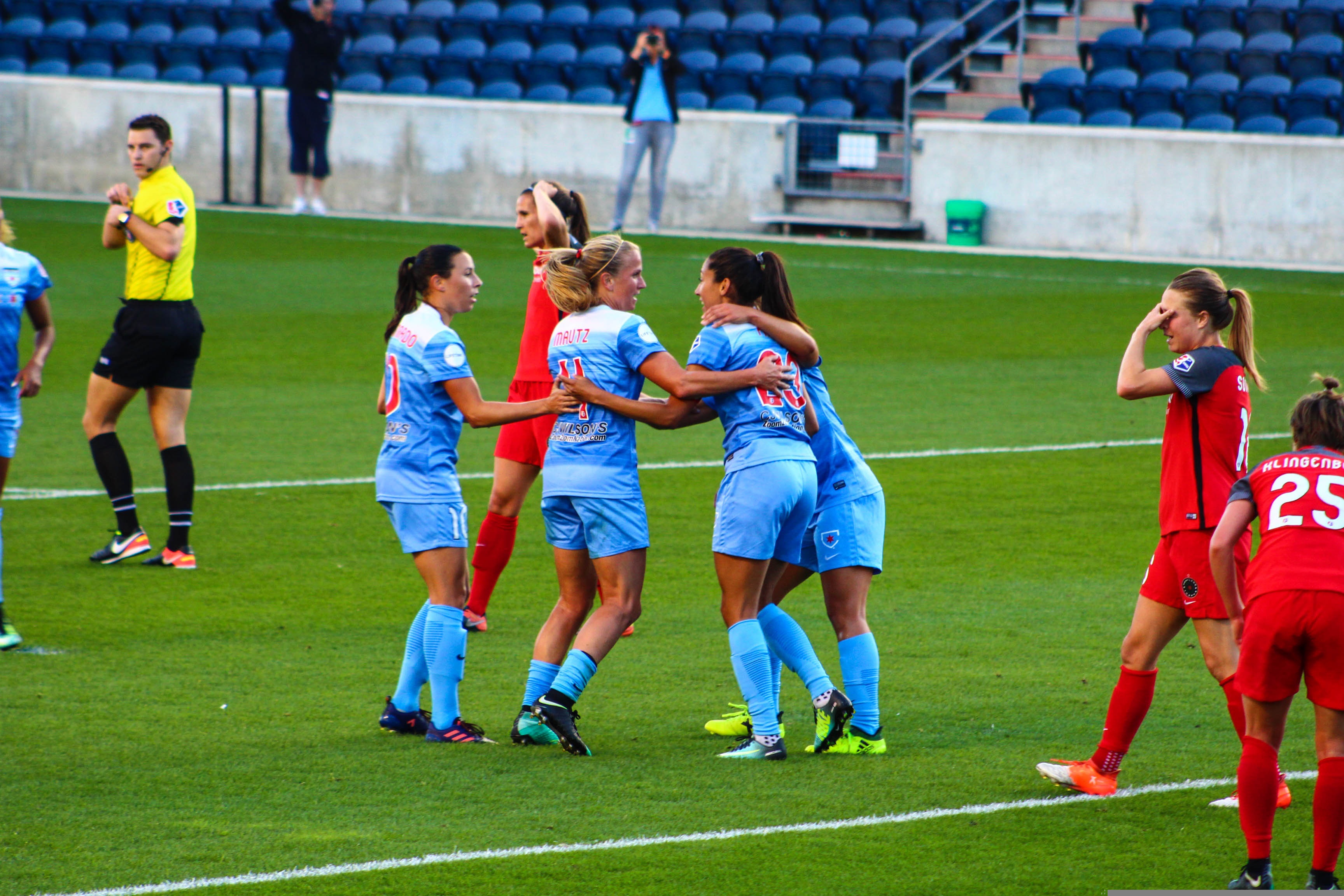
Over 15 million people play football in England alone, and the FA reported an 18% increase in grassroots participation between 2020 and 2024 – with 125,000 teams now playing across all levels. More people on the pitch means more demand for tournaments – single-day events that deliver real competition and excitement without the months-long commitment of a regular league.
If you're wondering how to organize a football tournament from scratch, this guide covers the entire process. From picking the right format, through building the tournament bracket, to managing results on match day. You don't need years of experience in sports administration – a solid plan and the right tools are enough to run a football tournament that every team will remember.
How to choose the right tournament format?
The format you pick shapes everything: how many matches you'll play, how much time you need, and how exciting the tournament feels for every team involved. Before you start booking pitches and printing posters, answer one question – which match system fits your football tournament best?
Cup, round-robin, or groups with a knockout stage?
You have four main formats to choose from. Each has its strengths and works best in different situations.
- Cup (single elimination) – lose and you're out. The fastest format, since 8 teams only produce 7 matches. The downside? A team that loses their opening match goes home after fifteen minutes. Works well when you have many teams and limited time
- Round-robin (everyone plays everyone) – every team faces all the others. The fairest system, because one bad game doesn't end your run. The catch is that 8 teams already means 28 matches – you need far more time or several pitches running at once
- Groups with a knockout stage – the classic middle ground. You split teams into groups (e.g., 4 groups of 4), play mini-leagues, and the top finishers advance to a knockout bracket. Each team plays at least 3 group matches, so nobody goes home after a single loss
- Champions League format (league phase + playoff) – a growing favorite, modeled on the new Champions League structure. All teams play in a single league table, but not against everyone – a draw assigns each team a set number of opponents (e.g., 4–6 matches). After the league phase, the top teams advance to a playoff bracket. It delivers more matches than traditional groups while avoiding the round-robin problem where match counts explode at 16 teams. A great choice when you want your football tournament to feel professional and keep an element of surprise – because every team faces a different set of opponents
Which format should you pick? For 6–8 teams and half a day, a cup is enough. With 12–16 teams and a full day, groups with a knockout stage or the Champions League format give you the best balance between playing time and excitement. Save round-robin for small tournaments (4–6 teams) where you want everyone to face each other.
A good format gives teams enough matches to feel the competition – but not so many that the football tournament drags on past dark.

How many teams do you need and how many matches will you play?
Before you open registrations, count how many matches your tournament will produce. It's not complicated, but knowing the numbers upfront helps you plan time, referees, and costs.
Here's a quick breakdown for the most common formats:
- 8 teams, cup – 7 matches (quarterfinals → semifinals → third-place match → final)
- 8 teams, round-robin – 28 matches. That's a lot, right? This is why round-robin rarely works with more than 6 teams
- 8 teams, 2 groups of 4 + knockout – 12 group matches + 4 knockout matches = 16 matches
- 16 teams, 4 groups of 4 + knockout – 24 group matches + 8 knockout matches = 32 matches
- 16 teams, Champions League format (6 matches per team + top 8 playoff) – 48 league-phase matches + 7 playoff matches = 55 matches. More football, but you'll need two pitches or two days
A practical rule: in a cup, the number of matches always equals the number of teams minus one. In round-robin, it's n×(n-1)/2, where n is the number of teams. For a group system, calculate matches in one group, multiply by the number of groups, and add the knockout phase.
The more teams you have, the more important it becomes to use a tool for managing the bracket – manual calculations with 16 teams and a group system are asking for mistakes.
How to plan your tournament schedule?
You know the match count – now convert it to hours. You need three numbers: match duration, break between matches, and number of pitches.
Typical match lengths for amateur tournaments:
- Six-a-side / socca – 2×10 min or 2×12 min (20–24 min total including halftime)
- Seven-a-side – 2×12 min or 2×15 min (24–30 min)
- Eleven-a-side – 2×15 min or 2×20 min (30–40 min)
Add 5–10 minutes of buffer per match for team changeovers, warm-ups, and potential delays. In practice, one six-a-side match takes about 30 minutes of scheduled time, and an eleven-a-side match takes 45–50 minutes.
Example: 16 six-a-side matches on one pitch, 30 minutes each = 8 hours. That's too long for a single day. The fix? Two parallel pitches cut it to 4 hours, and three pitches bring it under 3 hours.
Also schedule time for an opening ceremony (15 min), a lunch break (30–45 min), and the awards ceremony (15 min). A safe buffer for the whole tournament is an extra 30–60 minutes on top of the time calculated from matches alone.
It's better to schedule too much time than too little. A football tournament that runs past sunset because the schedule fell apart won't leave anyone with good memories.
Preparing the tournament
You've picked the format, counted the matches, and estimated the time. Now it's time to handle the organizational side – from the rulebook to the tournament bracket you'll show teams on match day.
Rules, budget, and promotion
A rulebook is a document that solves problems before they happen. It doesn't need to be twenty pages long – just lay out the rules clearly and answer the questions that will definitely come up.
What a football tournament rulebook should cover:
- Match rules – game length, number of players on the pitch, rolling substitutions or not, extra time and penalties
- Cards and disciplinary action – yellow and red cards, whether a suspension carries over to the next match, how you handle rough play
- Group stage scoring – 3 points for a win, 1 for a draw, 0 for a loss. What happens when teams are tied on points? Goal difference, then head-to-head record – decide this in advance
- Protests and disputes – who resolves disagreements and the deadline for filing a protest
- Fair play – conduct rules for players and spectators
Budget depends on scale, but the main line items are pitch rental ($50–$250 per day), referees ($40–$75 per referee), prizes (trophies, medals, individual awards), and insurance. For a corporate or sponsored tournament, add costs for branded jerseys, banners, and catering.
Start promoting 3–4 weeks before the tournament. Facebook groups around amateur football in your city, Instagram stories, posters at local pitches and in changing rooms – these are the channels that actually work in the world of amateur football. If you're running a corporate tournament, an email to HR departments and a message on the company Slack channel will do.
A rulebook written before the tournament takes 5 minutes. A rulebook improvised during the tournament because someone's arguing about a result – that's chaos.
Tournament bracket – by hand or with a generator?
The tournament bracket is the heart of any competition – it shows who plays whom, who advances, and who's in the final. You have several ways to build one.
- Paper or Excel – for 4–6 teams and a simple cup, this is enough. You draw the bracket, fill in team names, and you're done. Trouble starts with a group system: you need to manually calculate points, goal difference, and copy results into the knockout stage. Easy to make mistakes, hard to present clearly
- Online tournament bracket generator – tools like bracketmaker.app or challonge.com automatically create a bracket based on the number of teams. Faster than paper, but most generators are a one-time solution: you create the bracket, print it, and write in results by hand. No live scores, no group tables
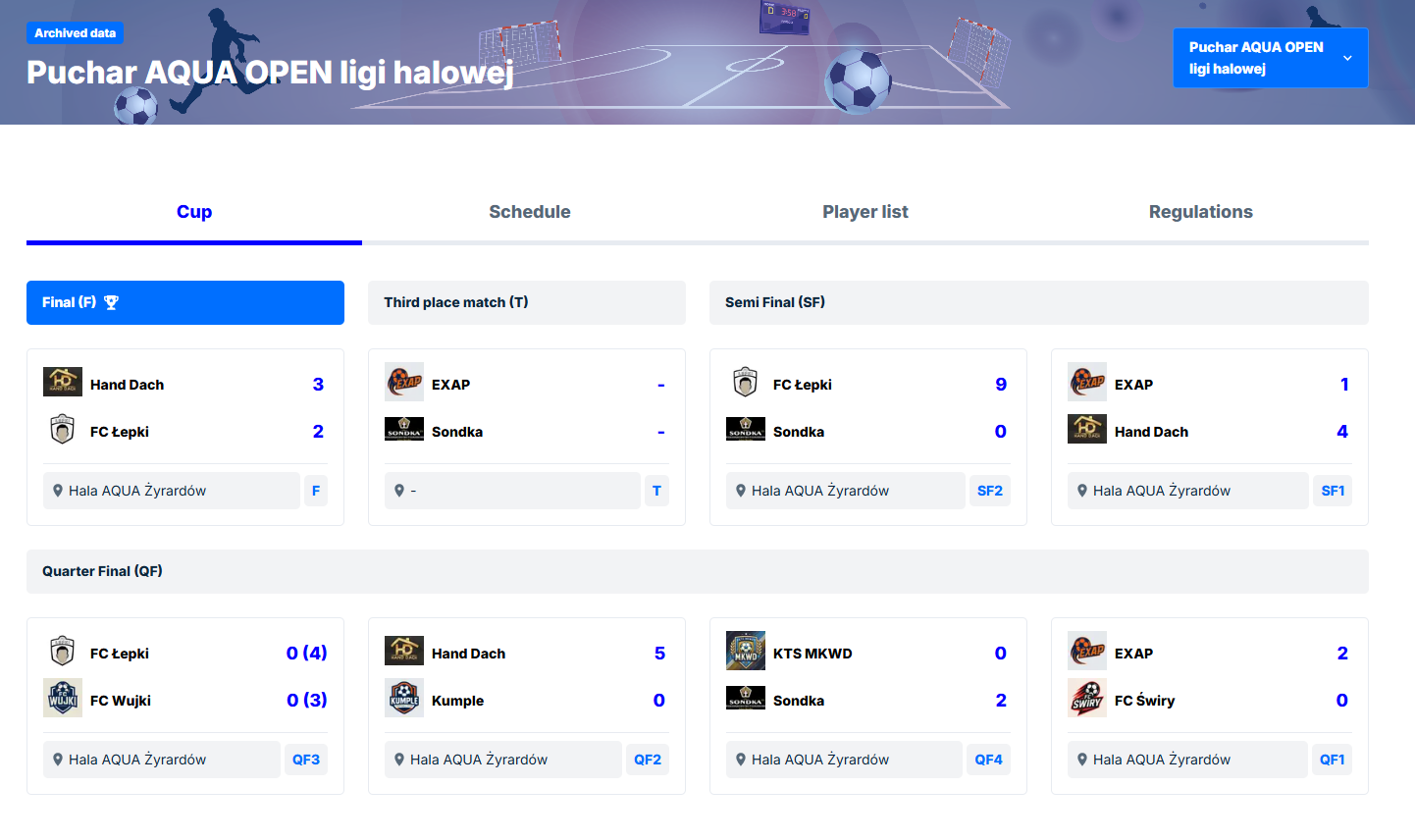
- Tournament management system – FLM System brings brackets, results, and group tables together in one place. You create a tournament, pick the format (cup, groups + knockout, or even the new Champions League format with a league phase and playoff), and the system generates the fixture list. After the league or group phase ends, the knockout bracket builds itself automatically based on standings – or you set the matchups manually with drag and drop in seconds. Referees enter results through a mobile app, and teams see updates in real time. The cost? From $0.75 per team per month – less than a bottle of water at the tournament
The difference between a bracket generator and a tournament management system is like the difference between a calculator and a spreadsheet. A bracket generator solves one problem. A management system solves all of them at once.
If you're organizing a football tournament for more than 8 teams, managing results and brackets by hand is a waste of time you can easily avoid.
Match day
Preparations are behind you, teams have confirmed, the bracket is ready. Now everything depends on how smoothly you run the day itself – from the first whistle to the trophy ceremony.
Match schedule and referees
The schedule is your roadmap for the day. Every team should know in advance what time they play and on which pitch. Print the schedule and post it at the venue entrance, or send it to teams the day before.
A few rules that will save your nerves:
- Start with a briefing – 15 minutes before the first match, gather captains and referees. Remind everyone of the rules, show where the changing rooms are, where the first aid kit is, and where results will be posted
- Buffer between matches – at least 5 minutes for team changeovers. For eleven-a-side, allow 10 minutes since warm-ups take longer
- Rotate referees – at a single-day tournament, a referee who officiates every match will be exhausted after four hours. If you have 16+ matches, you need at least two referees working in shifts
- Have a Plan B – what if a team doesn't show up? What if it rains on an uncovered pitch? Decide in advance whether you reschedule matches or award a forfeit
Don't forget the practical side: water for players (lots of it), a first aid kit, bibs in case of similar shirt colors, and someone responsible for updating the scoreboard.
A well-run schedule makes a football tournament look professional – even when it's neighborhood teams playing.
Live results and post-tournament stats
Nothing kills the atmosphere of a tournament faster than someone asking "what's the score in Group B?" and nobody knows. Results need to be visible and up to date – for players, spectators, and the organizer.
The simplest solution is a whiteboard by the pitch where someone writes results after each match by hand. It works for a small tournament, but with 4 groups and 32 matches it breaks down.
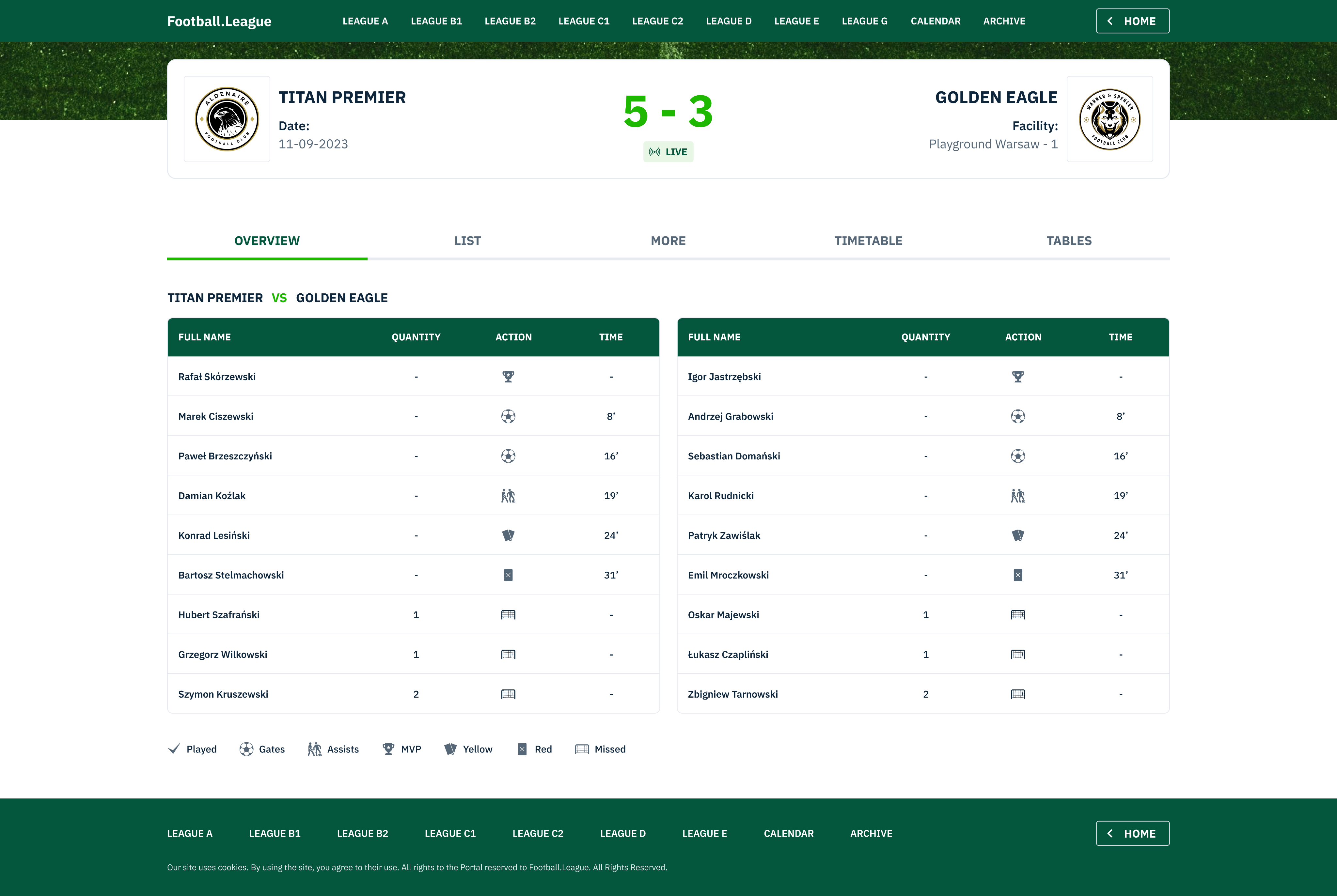
A better approach is digital results. With FLM System, the referee enters the match score through a phone app, and group tables and brackets update automatically. Teams and spectators can follow the tournament on their phones in real time – no need to crowd around a board waiting for an update.
After the tournament, publish the full stats: final tables, top scorer, best goalkeeper, MVP award. For teams, it's a keepsake. For you, it's promotional material for the next edition. If the tournament was a success and you want to take it further, consider starting a regular league – a tournament is the perfect chance to test interest.
A football tournament with live results and post-event stats is a completely different experience from one where nobody knows who's leading the group.
FAQ - Football tournament
How many teams do you need to organize a tournament?
The minimum is 4 teams – enough for a short cup (3 matches: two semifinals and a final). For round-robin, you can sensibly start with 3 teams (3 matches). The sweet spot is 8–16 teams – enough competition to keep things exciting without the football tournament stretching on too long.
How to create a tournament bracket for 16 teams?
Two popular options. Cup: 15 matches in 4 rounds (round of 16 → quarterfinals → semifinals → final). Groups + knockout: 4 groups of 4 teams (24 group matches), top 2 from each group advance to quarterfinals (8 knockout matches). A 16-team tournament bracket is easy to build with an online bracket generator or a tournament management system that automatically moves group winners into the knockout stage.
How to organize a six-a-side or socca tournament?
A six-a-side or socca tournament follows the same principles as a full-size tournament – just at a smaller scale. Matches are shorter (2×10 or 2×12 min), the pitch is smaller, and squads are 5+1 or 6+1 players. It's the ideal format for a single-day event, because shorter matches let you fit more games into the same time window. Groups with a knockout stage work best here. You can learn more about how amateur football leagues operate in a separate article.