
8 min• 10.04.2026
What is futsal? Rules, game format, and how to start your own league
By Dawid Pątko
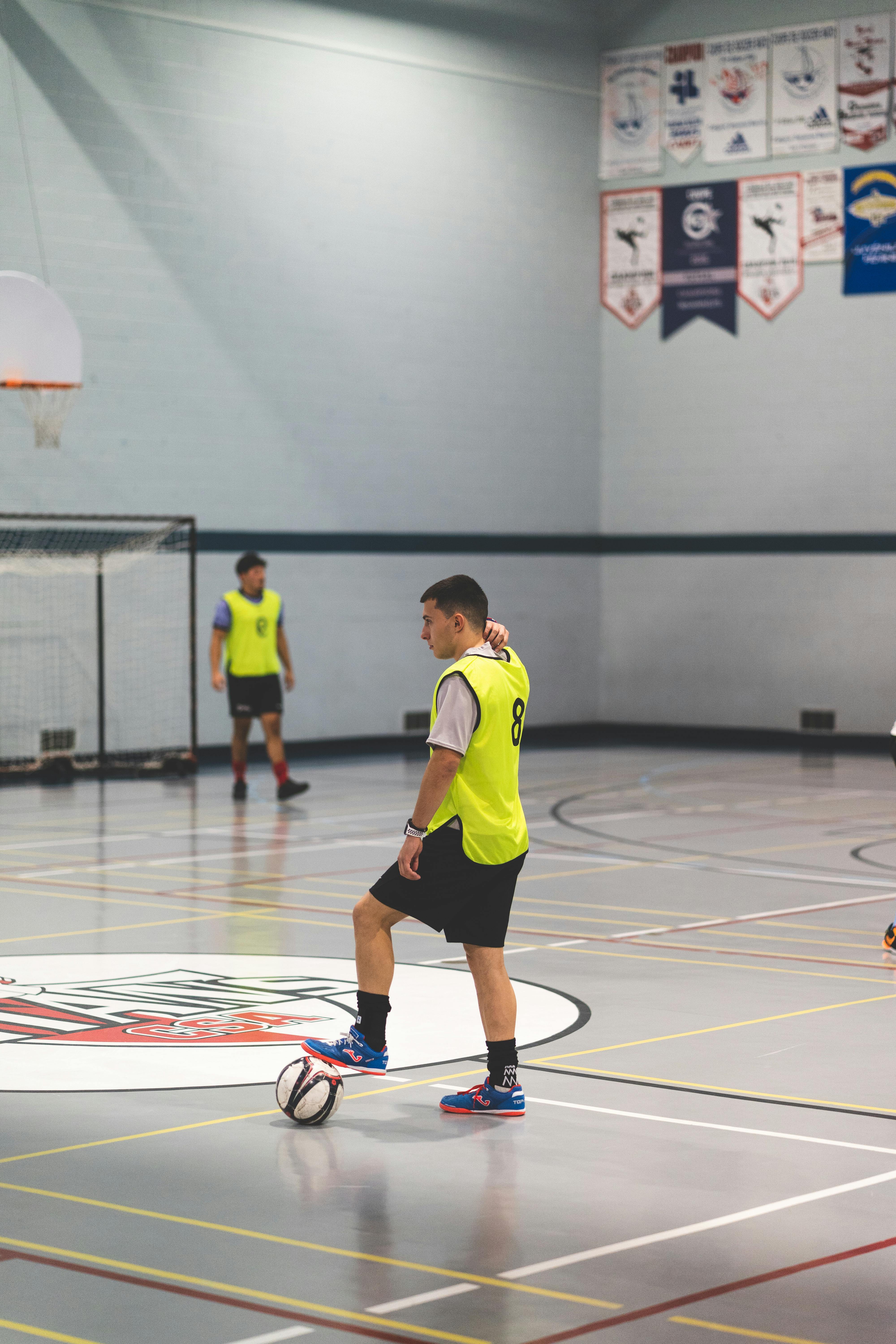
FIFA estimates that over 30 million people play futsal worldwide. Across Europe the sport is growing at a pace that would have been hard to predict a decade ago – UEFA Futsal EURO 2026 qualifiers drew 48 national teams, 146 matches, and over 160,000 fans in the stands. This is not a niche curiosity – it is the fastest-growing format of football in the world.
If you run an amateur league or you are thinking about starting one, futsal deserves a serious look. It is played indoors, so weather and seasons do not matter, and matches are shorter than traditional 11-a-side football. This article explains what futsal is, how the rules work, and how to organize your own futsal league step by step – from the perspective of an organizer, not a spectator. If you are looking for a tool to manage your fixtures, standings, and live scores, take a look at FLM System.
What is futsal and what rules apply?
Futsal has over 90 years of history, but it still gets confused with casual indoor kickabouts. For a league organizer, the difference matters – futsal is a structured format with a clear rulebook, which means fewer disputes and easier management.
What is futsal? – definition and game format
Futsal is an indoor version of football played in a 5v5 format, officially recognized by FIFA. The sport originated in Uruguay in the 1930s and has had an international rulebook since 1989. Today there are World Cups, European Championships, and professional domestic leagues across dozens of countries.
In practice, a few things set futsal apart and directly affect how you organize a competition:
- Pitch – an indoor sports hall, 40x20 m (minimum 25x16 m). A standard school gym or local sports center is usually enough
- Ball – smaller (size 4) with reduced bounce, which forces ground play and technique instead of long balls
- Squad – 5 players on the pitch (4 outfield + goalkeeper), matchday squad of up to 14
- Match length – officially 2 x 20 minutes of effective time, but in amateur leagues the organizer sets the clock. Many leagues play 2 x 15 or even 2 x 12 minutes to fit more games into a single hall booking
That last point matters from a practical standpoint. A futsal match, including the break, wraps up in roughly an hour or less depending on the format you choose. In a 3-hour hall slot you can comfortably fit 3–4 games, which gives you a full matchday for an 8-team league in a single afternoon.
Key rules from an organizer's perspective
You do not need to memorize the FIFA rulebook – in an amateur league you will adapt the rules to your setup anyway. But a few regulations are worth knowing because they shape how you plan the competition and what players will expect.
- Rolling substitutions, unlimited – players come on and off the pitch during play, no stoppage needed. In practice this means that even a team full of after-work amateurs can rotate freely and nobody collapses after 10 minutes
- Goalkeeper has 4 seconds to release the ball – no holding on to it forever. The game moves fast. A popular tactical twist is the "fly goalkeeper" – swapping the keeper for an extra outfield player, often used in the closing minutes of a losing match
- Accumulated fouls – the first five fouls per team per half are punished with regular free kicks (with a wall). From the sixth foul onwards, the opposing team gets a direct free kick from 10 meters with no wall. In an amateur league, keeping this rule is worth it – it keeps rough play in check
- No offside – one less rule for the referee to worry about and zero arguments at the sideline
Futsal rules are simpler to apply in an amateur league than 11-a-side football. Smaller pitch, fewer players, clearer situations – less work for you and for the referee.

Futsal or small-sided football – which format for your league?
Futsal is not the only small-sided format out there. As an organizer you have at least two popular options, and each has its strengths. Before you book a hall, it is worth comparing them.
How they differ in practice
- Futsal – indoor sports hall, low-bounce ball, official FIFA rulebook. No weather dependency, playable year-round. Requires access to a hall, which means rental costs and limited time slots
- Small-sided outdoor football (6-a-side, socca) – played on outdoor pitches or small artificial turf fields, typically 6v6 or 7v7. Lower venue costs than a hall, but dependent on weather and season. The most widespread amateur format in many countries, with flexible rules that each league sets on its own
How to match the format to your conditions
The choice depends mostly on what you have available. Access to a sports hall – futsal is the natural pick. An outdoor pitch with artificial turf – small-sided football will work better. Many organizers combine both approaches: futsal from October to March, outdoor leagues in the summer.
There is no single "best" format – the best one is the one you have players and a venue for. Futsal wins where winter lasts half the year and a hall is the only way to keep a league running through every season.
How to organize an amateur futsal league?
Decided on futsal? Good call, as long as you have a hall nearby and a group of people who want to play regularly. Here is what to prepare before your first season kicks off.
Venue, budget, and rules
The first step is finding a hall with a regular, repeating time slot – for example every Saturday from 10:00 to 14:00. Rental prices depend on your location, but expect to add the cost of balls (2–3 are enough to start) and referee fees on top.
You spread the costs across teams through seasonal entry fees – the amount depends on the number of teams, the length of the season, and your local venue costs. The more teams you have, the lower the cost per team. With 8 teams in a round-robin format you get 28 matches, which at 3–4 games per matchday means 7–8 weekends of competition.
Set your rules before the first matchday and send them to every team captain. The minimum covers: match length, card rules, forfeit penalties, and how you break ties in the standings. You do not need to start from scratch – for a solid starting point, read our guide on how to start an amateur football league.
Running the competition without chaos
Many organizers start by tracking results in a spreadsheet and communicating through WhatsApp. With 4–6 teams, that works. With 8 or more, things start to fall apart – someone forgets to enter a score, the standings go out of sync, the schedule needs rebuilding after a forfeit, and players ask about stats you are not tracking.
That is the point where a proper system pays for itself. FLM System generates your schedule automatically, recalculates the standings after every match, gives players live score updates through a referee app, and publishes everything on your league's own website. Instead of spending your Sunday evening updating a spreadsheet, you check the results with one click.
The hardest part of running a futsal league is not finding a hall – it is the weekly grind of updating results, standings, and chasing teams for information. The right tool takes that work off your plate and lets you focus on what actually matters in a league – making people want to come back next season.

FAQ
How long is a futsal match?
Officially 2 x 20 minutes of effective time, but amateur leagues often shorten this to 2 x 12 or 2 x 15 minutes to fit more games into a single hall booking. In real time, a match including the break lasts anywhere from 40 minutes to an hour.
How many players are on a futsal team?
Five players per side on the pitch – four outfield and one goalkeeper. The matchday squad can include up to 14 players. Substitutions are rolling and unlimited, meaning everyone gets a chance to play in an amateur league.
What is the difference between futsal and indoor football?
Futsal follows an official FIFA rulebook – effective time, a low-bounce ball, accumulated fouls, and no offside. "Indoor football" or casual indoor kickabouts have no fixed rules. For a league organizer, the difference is important: a clear rulebook means fewer arguments and simpler management.
What size pitch do you need for futsal?
A sports hall measuring 40x20 m, though the rules allow a minimum of 25x16 m. In practice, a standard school gym or community sports center is enough to run an amateur futsal league.