
9 min• 25.06.2026
How do you get sponsors for your football league?
By Dawid Pątko

More than four in five grassroots clubs say a lack of funding and sponsorship is their single biggest challenge, according to the FORZA State of Grassroots Football Report 2025. The same study found that 84% rely on local-business sponsorship to keep going. Government schemes such as the £98m Multi-Sport Grassroots Facilities Programme help with pitches and changing rooms, but the weekly running costs still land on organisers, and most cover them with sponsorship. The demand is obvious. What is missing is rarely a willing sponsor, and far more often a clear, professional way to ask.
Most league organisers reach out with a vague "would you support us?", no real offer, and nothing concrete to show for the money. A local business owner cannot say yes to that, even when they want to. A football league is worth far more to a sponsor than any single team, but only if you can prove the audience and make the offer look the part. This guide covers where to find football league sponsors, how to package and pitch a deal, and how the right league platform turns your competition into something a business is genuinely glad to pay for.

Why local businesses sponsor football leagues?
Sponsorship is not charity, and treating it as a donation is the quickest way to hear no. A business backs your league because it expects something in return: attention from the right people, in the right area, at a price that beats other local advertising. Once you frame it as a trade rather than a favour, the whole conversation changes.
What a sponsor is really buying
A local business is buying access to an engaged audience that already lives on its doorstep. Your players, their families, and everyone who checks the league table are mostly within a few miles of that shop, gym, or pub. That is sharper targeting than a roadside banner and warmer than a Facebook ad.
They are also buying goodwill: people remember the company that backs the league they play in every week, and that local loyalty is hard to buy any other way.
Why a league beats a single team
This is the part most organisers undersell. A single Sunday league side offers a sponsor one shirt and maybe a dozen families. A league offers ten, twenty, or fifty teams, a full season of fixtures, and one public hub that every participant checks every week. You run the whole competition, so you control far more space to sell than any one club.
That scale is your leverage. You can give a headline sponsor exposure across the entire league while selling smaller placements to several local businesses at the same time. The more organised and visible your league is, the more you can sell, which is exactly why it pays to grow the league itself alongside the sponsorship hunt.
Where to find football league sponsors?
The best football league sponsors are almost always closer than organisers expect. You do not need a media kit and a cold-email campaign to land your first deal. The FORZA report found that 61% of grassroots clubs rely on personal networks to secure sponsorship, and that is exactly where to start.
Start with your league's own network
Begin with warm connections. A parent who runs a local cafe, a player who manages a car dealership, the physio half your teams already see: these people know the league, trust you, and need far less convincing than a stranger. One genuine introduction beats fifty cold approaches.
Ask your captains and organisers who they work for and who they know. Most leagues sit on a web of small-business owners without ever realising it. A short message that opens with "you already play in this league" lands far better than a generic request.
Local businesses that say yes most often
Some types of business back community football again and again because it fits how they already market themselves. When you build your shortlist, start here:
- Sports shops and kit suppliers benefit directly from a room full of active players, and they often prefer to sponsor in kind with kit, equipment, or discounts rather than cash.
- Pubs and restaurants are a natural fit, especially if they can host your post-match crowd or the end-of-season presentation night.
- Building trades and local tradespeople, from plumbers to scaffolders, are some of the most reliable grassroots shirt sponsors in the country.
- Gyms, physios, and clinics want to reach exactly the fit, injury-prone audience your players represent.
- Local high-street services, from estate agents to driving instructors, value the trust that comes with backing a community competition.
How to package and pitch your sponsorship
A vague ask gets a vague answer. The leagues that bring in real money turn sponsorship into a product, with set tiers, clear prices, and a short document that makes saying yes easy. You are not begging for support. You are selling a small, well-defined piece of local advertising.
Build tiered sponsorship packages
Two or three tiers is the sweet spot. Fewer feels thin, more causes decision paralysis. Clear pricing also removes the awkward haggling that kills so many deals before they start. Here is a simple structure you can adapt to your league's size:
- Title sponsor (£1,000–2,500 a season) – the league named after them, a logo on every page, the homepage banner, shirt sponsorship, and sponsored posts.
- Team or matchday sponsor (£250–600) – a logo on the league table and fixtures, plus a team named after them and photo-gallery branding.
- Supporter (£75–200) – a logo in the sponsor row and a mention in the league newsletter.
Adjust the figures to your area: a 40-team city league can charge well above a new eight-team Sunday competition, and in-kind deals such as kit, trophies, or pitch hire often matter as much as cash.
What your proposal and letter should include
Once a business is interested, send something they can act on. A good sponsorship proposal answers three questions in under a page: who sees the brand, what exactly they get, and what it costs. Keep it short, specific, and free of pleading.
A solid proposal or sponsorship letter covers:
- A one-line description of the league and its reach (teams, players, weekly site visits)
- The tier options with prices and what each includes
- Where the logo appears, with a screenshot of your actual league page
- The season dates and a single clear next step to confirm
That screenshot matters more than anything else in the document, which brings us to the part most leagues get wrong.
Make your league worth sponsoring
A sponsor pays for visibility it can see and, ideally, measure. A hand-painted board on a fence and a logo in a WhatsApp group are hard to value and easy to ignore. A public, professional league site is the opposite: it is space you own and can sell, week after week, for the whole season.

Turn your league site into sponsor real estate
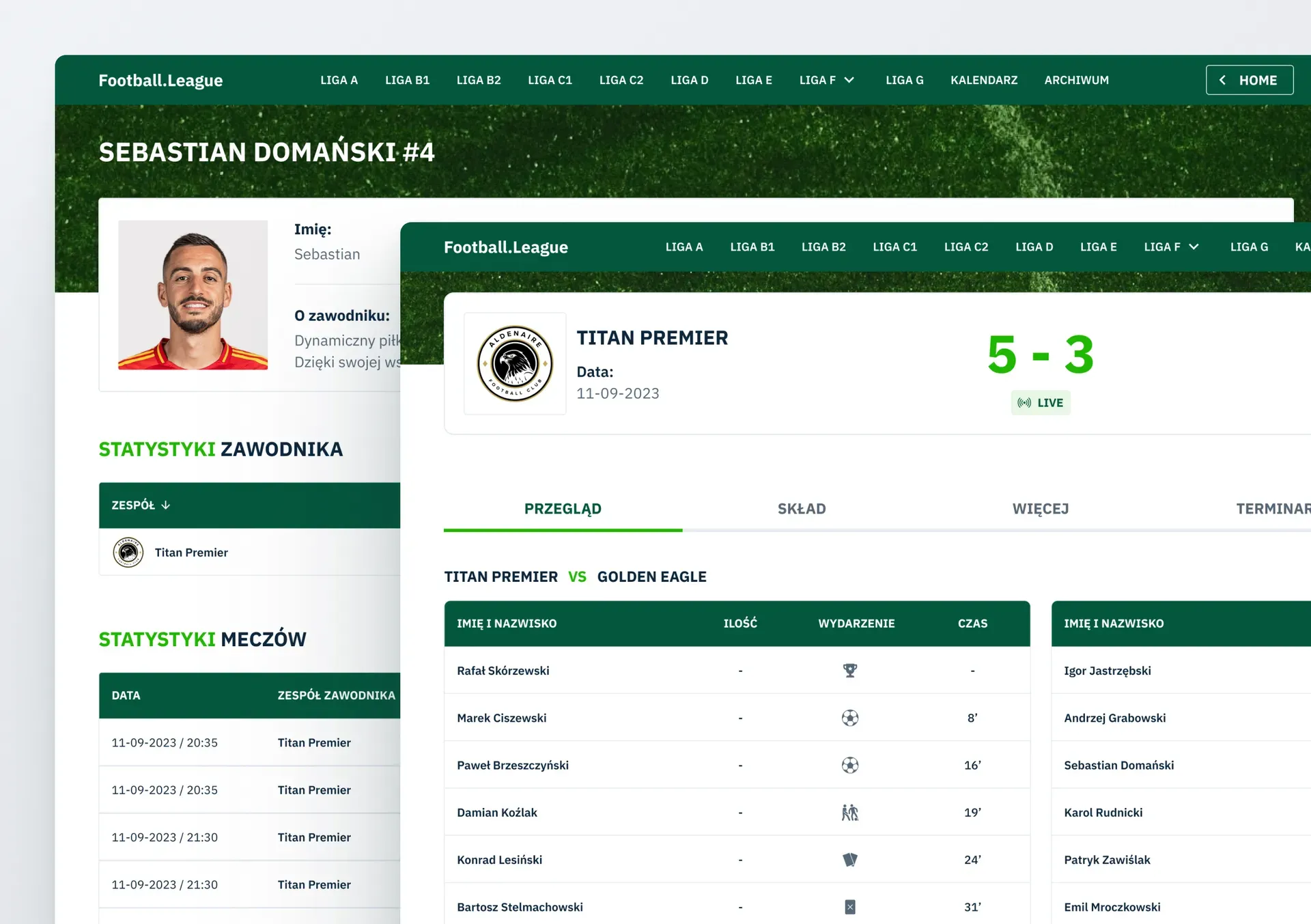
This is where the platform you run on does the heavy lifting. FLM System gives a league real sponsor space instead of vague promises. The site ships with guaranteed sponsor fields and logo slots, so a sponsor's brand has a permanent home rather than a logo squeezed into a corner. There is a homepage banner built to carry a headline sponsor, and you can publish sponsored articles as league news, run matchday photo galleries, and brand them however a deal requires.
The quiet asset is the player and team history pages. Every player and team gets a profile with stats and a season-by-season record, and players come back to those pages constantly to check their own numbers. That is a recurring, engaged audience returning to the same screens all season, exactly the attention a local business will pay to sit beside. A clean, modern site also makes the league look credible, which makes a sponsor's yes a lot easier. If you are weighing up your options, compare league website tools and what a league site should include first. You can run your whole league on FLM System for free while you build the sponsorship side up.
Prove the value so sponsors renew
Landing the deal is the easy half. Keeping your football league sponsors is where leagues either build a reliable income stream or start from scratch every season. The trick is to report back. At the end of the season, send each sponsor a short note with the numbers: how many players took part, how many visits the league site logged, how often their branding was seen.
When a sponsor can point to real reach instead of a fuzzy sense of backing local sport, renewal becomes the default rather than a fresh negotiation. League-table traffic, player-profile visits, and photo-gallery views are all evidence you can hand over. Sponsors renew when you treat the relationship as a business arrangement, with proof, not just a thank-you.
FAQ
How do you get sponsors with no track record?
Start small and local. A first-season league will not land a national brand, but a local cafe, gym, or tradesperson will often back you for a modest sum or in-kind support such as kit. Use warm introductions from within the league, offer a clear package, and be honest about your size while showing how engaged your players are.
How much does it cost to sponsor a local football league?
It varies by league size and area, but grassroots sponsorship typically runs from around £75 for a small supporter slot to a couple of thousand pounds for a title deal across a season. Many smaller businesses prefer in-kind sponsorship, such as kit or trophies, which can be worth as much as cash to a stretched league budget.
What should a sponsorship proposal include?
Keep it to a single page a busy owner can read in two minutes: the league's reach, the tier options with prices, and where the logo appears. The detail that does the real work is a screenshot of your live league page, so the sponsor sees exactly what they are buying instead of imagining it. Lead with proof, not with how much you need the money.
What can you offer sponsors besides a logo on the shirt?
A surprising amount, if your league has a real digital presence. Beyond the shirt, you can offer:
- A homepage banner and guaranteed logo placement across the site
- Sponsored articles and branded matchday photo galleries
- Visibility on the league table, fixtures, and player history pages players check every week
- A named tier, such as a title sponsor or matchday sponsor
These options are measurable and recurring, which is what separates a sponsorship a business renews from one it quietly drops.