
12 min• 04.08.2026
7v7 soccer: rules, field dimensions, and how to run a league
By Dawid Pątko
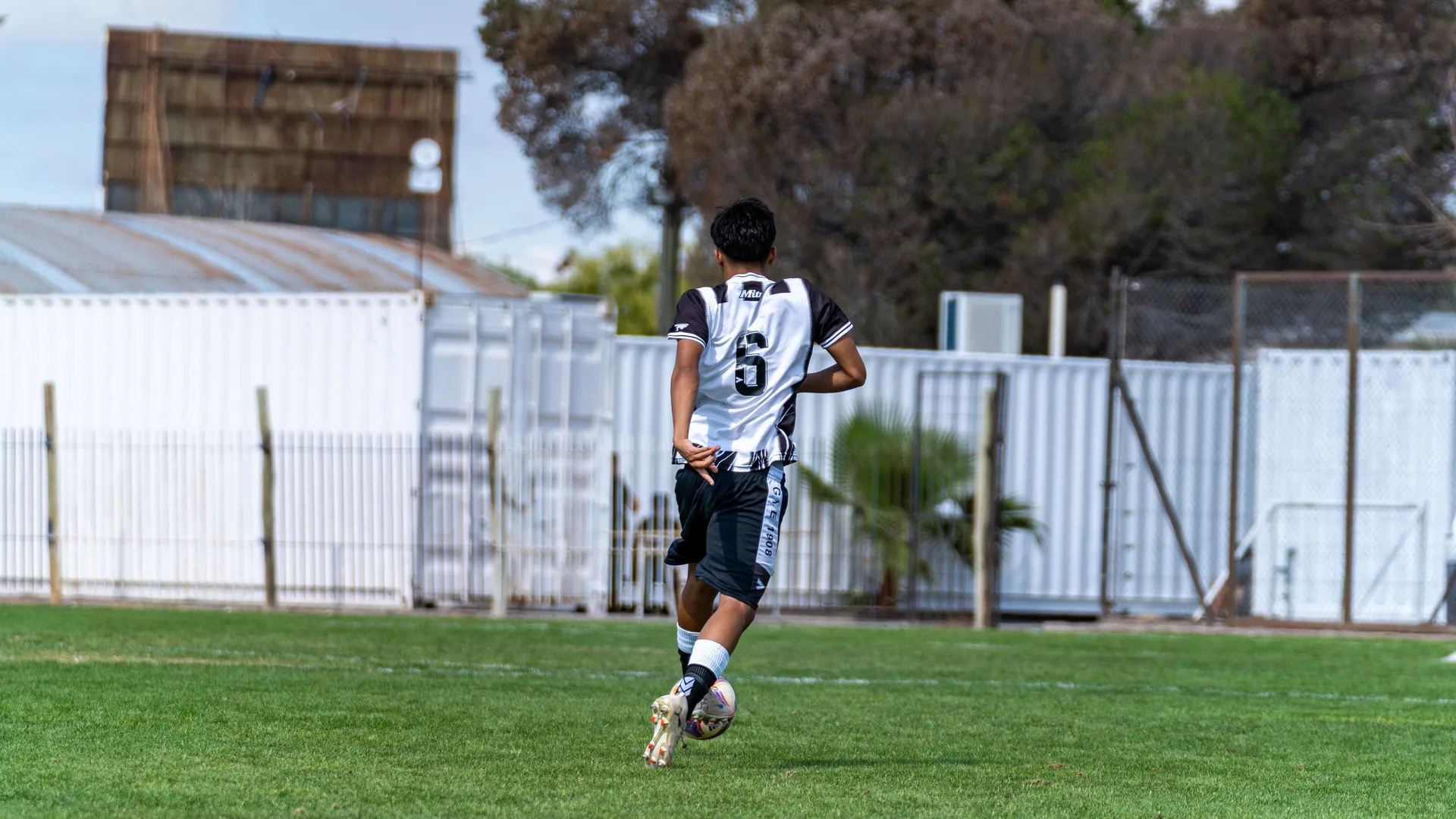
Soccer participation in the United States reached 23.4 million people in 2025, split between 16.8 million outdoor and 6.6 million indoor players, and outdoor participation grew 15.8% in a single year according to SFIA's soccer participation data. Ahead of a home World Cup, those are the fastest growth numbers the sport has posted here in a decade.
Very little of that growth lands on full-size fields. It lands on small-sided ones, and 7v7 is where most of it goes: youth clubs run it as the standard step between 4v4 and 9v9, and adult rec leagues have adopted it because seven players are far easier to field on a Tuesday night than eleven. What usually lags behind is the admin. The league lives in a group chat, the standings live in a spreadsheet, and somebody rebuilds both every Monday. Before your first kickoff, running a 7v7 soccer league comes down to three decisions: which rules you apply, what field you play on, and how the competition is structured. This guide covers all three, using the specifications US Soccer actually publishes, and ends with the steps to turn them into a 7v7 soccer league that survives past its first season.

What is 7v7 soccer and how does it differ from other formats?
Small-sided soccer in the US comes in half a dozen shapes, and the labels get used loosely at the rec level. Worth pinning down the vocabulary before talking about field size, because each format carries different dimensions and a different rulebook.
What is 7v7 soccer?
7v7 soccer is a small-sided format where two teams of seven players, six field players and a goalkeeper, play on a field roughly half the size of a full pitch. Games are shorter, goals are smaller, and substitutions are usually unlimited. US Soccer sets the standard for youth 7v7; adult rec leagues set their own.
In the youth game, 7v7 is the mandated format for U9 and U10 under US Soccer's Player Development Initiatives, sitting between 4v4 at U8 and 9v9 at U11. In the adult game it is a rec format with no national governing rulebook at all, which is why two 7v7 leagues in the same city can run noticeably different competitions.
7v7 compared with 11v11, futsal, and indoor soccer
Four formats get mentioned in the same breath and mean different things:
- 11v11 – the full field, eleven a side, two 45-minute halves, and the IFAB Laws applied in full.
- 9v9 – the U11 and U12 step between 7v7 and the full game, played on a bigger field with bigger goals.
- Futsal – five a side on a hard court with a low-bounce ball and its own FIFA rulebook. Played indoors, and the ball goes out of play at the touchline like it does outdoors.
- Indoor soccer – the American walled game, played in an arena where the boards keep the ball live. Fast, continuous, and a genuinely different sport from 7v7 despite often being sold by the same facility.
7v7 is the outdoor one: grass or turf, no walls, throw-ins at the touchline, goalkeeper in a real goal.
How many players are on a 7v7 roster?
Seven on the field, keeper included. Rosters are a different question: most leagues let teams register somewhere between 12 and 16 players, and some go to 18.
That range exists because attendance in adult rec soccer moves week to week. A team with twelve registered players rarely fields the same seven twice in a row, and with free substitutions the whole bench rotates through a single game. For the organizer the consequence shows up in record-keeping. If goals and cards are not tied to a specific player, nobody can say who led the league in scoring when the season ends, and suspensions become guesswork.
-1920x1280.webp?2026-08-07T10%3A18%3A24.731Z)
7v7 soccer field dimensions
US Soccer publishes a range rather than one number, and adult leagues play wherever they can rent. The specifications below are the youth standard, which is the closest thing to an official reference and a sensible default for adult play too.
How big is a 7v7 soccer field?
A 7v7 soccer field is 55 to 65 yards long and 35 to 45 yards wide under US Soccer's Player Development Initiatives. That works out to roughly half a full-size field, and clubs regularly mark two 7v7 fields across the width of one 11v11 pitch.
Adult rec leagues rarely hit those numbers exactly. Turf facilities build to whatever the lot allows, and plenty of leagues play on something closer to 50 by 30. If you rent the venue, measure it before you publish anything.
Goal size, penalty area, and markings
For 7v7 the recommended goal is 12 feet wide by 6 feet high, with a maximum frame of 18.5 by 6.5 feet. Both are considerably smaller than the 24 by 8 feet used in the full game.
The rest of the markings follow the same reduced scale. The penalty area is 24 yards wide and 12 yards deep, the penalty spot sits 10 yards from the goal line, and the center circle has an 8-yard radius. Leagues playing on undersized turf shrink all of it proportionally, which is fine as long as the numbers are written down and every team knows them before the season starts.
What ball size is used in 7v7 soccer?
Size 4 for the U9 through U12 age groups, which covers the entire youth 7v7 bracket. Adult 7v7 uses size 5, the same ball as the full game.
Worth specifying in your rules who supplies the match ball. In leagues where each team brings its own, the argument about whose ball gets used arrives sooner or later.
Converting an 11v11 field into two 7v7 fields
Plenty of leagues start by taking over a full-size field during dead hours. The conversion is straightforward and the equipment is cheap:
- Split the field across its width at the halfway line and lay out two fields running sideline to sideline.
- Set portable 12-by-6 goals on each touchline.
- Mark the penalty areas with cones or temporary paint, matching the dimensions you published.
- Leave a buffer lane between the two fields so stray balls do not cross into the other game.
Done this way, one 11v11 field hosts two 7v7 games at once and doubles the number of teams you can fit into the same two-hour rental.

7v7 soccer rules
Here is the part that catches first-time organizers: for adult 7v7 there is no national rulebook. IFAB governs 11v11 and US Soccer publishes the youth 7v7 standard, but an adult rec league writes its own rules and adapts them to its field and its time slot. The rules that govern your league are the ones you publish.
How long is a 7v7 soccer game?
Two 25-minute halves is the common setup, with a range from 2×20 to 2×30. Adult leagues cluster at the short end for a practical reason: field time is billed by the hour, and warmup, the game itself, and clearing out for the next group all have to fit inside it.
Two 25s plus a five-minute half gives you a 55-minute game that slots into an hourly block. When your league runs several games back to back on one field, that arithmetic decides the shape of the entire matchday.
Substitutions, offside, and restarts
These are the three rules that vary most between leagues, and the three that cause the most arguments when they are not written down:
- Substitutions – nearly all 7v7 leagues use free, repeated substitutions with players entering and leaving at a marked zone. Some require a stoppage first.
- Offside – US Soccer applies offside in youth 7v7, enforced from a build-out line. Adult rec leagues often drop it entirely to make life possible for a single referee, and some apply it only inside the penalty area. Whichever you choose reshapes how teams defend.
- Restarts – throw-ins are standard, though some leagues use kick-ins from the touchline instead. Youth 7v7 adds the build-out line, which pushes the defending team back on goal kicks and keeper possessions to encourage playing out from the back.
Cards and discipline
Yellow and red work the way they do in the full game, with one common addition: many 7v7 leagues use a temporary send-off, where a cautioned player sits for two or five minutes and the team plays a man down. The idea comes from futsal and hockey, and it works well in rec soccer because it punishes the foul without wrecking the game.
The part that matters to the organizer is accumulation. If two yellows across separate matchdays trigger a one-game suspension, somebody has to track every card against every player for the whole season. Kept by hand, that record is among the first things to break once a league grows past a dozen teams.
Your league's own rulebook
With no adult 7v7 standard to point at, your rulebook is the document that ends disputes before they start. A workable one fits on two pages and answers: field and goal dimensions, game length, roster size and players on the field, substitution policy, whether offside applies, restart rules, cards and accumulation, standings tiebreakers, and what happens when a team no-shows.
Publish it before the first matchday, somewhere captains can find it without texting you. A league running on FLM System keeps that rulebook on its own league site next to the schedule and the standings, so the answer to "how does the card thing work again?" is already online.
Steps to run a 7v7 soccer league
With rules and a field settled, what remains is the work that turns a set of games into a competition. Four decisions, in this order.
Pick your competition format
The format determines how many games each team plays and how long the season runs. Three options cover almost every case:
- Round robin – every team plays every other team once or twice. It is the fairest structure and works best with 6 to 12 teams. The mechanics are laid out in our guide to round robin scheduling.
- Groups plus playoffs – with a larger field, splitting into groups and advancing the top teams keeps the season short.
- Straight knockout – single elimination for weekend tournaments.
Past a dozen teams, divisions with promotion and relegation keep matchups competitive and give bottom-table teams a reason to keep showing up in March.

Build the schedule and the standings
A round robin with ten teams is 45 games. Building that by hand in a spreadsheet is possible, and so is breaking it the first time a game gets postponed.
Standings are the other friction point. Points, goal difference, games played, and tiebreakers all recalculate after every result, and one mistyped cell is enough to start an argument. In FLM System the schedule generates in one click from your registered teams, and the table updates itself the moment a result goes in.

Collect team fees and register rosters
Registration and fees eat more of an organizer's time than anything else and get noticed the least. Every season means gathering team and player details, confirming who is paid up, and chasing the ones who are not.
FLM System keeps the roster records and flags who has paid and who has not, matchday by matchday, so each team's status is visible at a glance. Collecting the money still happens your usual way, by transfer or in cash; what goes away is the second notebook where you tracked who owed you. Our guide on collecting team fees works through the process.
Publish results where teams look for them
This last step separates a league that grows from one that quietly folds. Players want the result the same evening, their name on the scoring leaderboard, and next week's fixture without having to ask in the group chat.
With FLM System the referee or a coordinator enters events from a phone during the game, and the result, the stats, and the table appear on the league's public site in real time. Every team and player gets a profile with history that carries across seasons. A 7v7 league with its own site, a table that is always current, and public stats reads as a real competition, and that is what brings teams back next year and gets a local sponsor to answer your email.
Setting up an account and importing teams takes a few minutes, pricing is $1 per team per month, and you can try it without a card before committing to anything.

Frequently asked questions
How big is a 7v7 soccer field?
55 to 65 yards long by 35 to 45 yards wide under US Soccer's Player Development Initiatives, with goals of 12 by 6 feet. That is about half a full-size field. If your league rotates between venues, publish the range you accept rather than a single figure, so nobody objects when a game lands on a shorter field.
How long is a 7v7 soccer game?
Two 25-minute halves with a short break is the most common setup, within a range of 2×20 to 2×30. If you schedule games back to back on one field, leave five minutes between them for the changeover; without that cushion, one late start drags the whole matchday with it.
How many players can a team register?
Seven play at a time and registered rosters usually run between 12 and 16, with some leagues allowing 18. Each competition sets its own cap, and it mostly comes down to two things:
- Your substitution policy – with free subs a deep roster gets used, which makes a higher cap worth having.
- Roster lock-down – a lower cap stops a team from adding new players midseason to load up before the playoffs.
Whatever number you pick, close registration on a fixed date and say so from the start.
What ball size is used in 7v7 soccer?
Size 4 for youth 7v7, covering U9 through U12, and size 5 for adult 7v7, the same as the full game. Specify in your rules who provides the match ball to head off the argument before kickoff.
Is there offside in 7v7 soccer?
It depends on the league. Three approaches are common:
- Offside with a build-out line – the US Soccer youth standard, which also pushes defenders back on goal kicks.
- No offside – widespread in adult rec leagues, because it makes the game manageable for one referee.
- Offside in the penalty area only – a middle ground some leagues use to stop goal-hanging without full enforcement.
What does it cost to start a 7v7 league?
The real costs are field rental, referees, and league software, and rental dominates. Most organizers start by booking a weekly block at a turf facility rather than building anything, splitting the cost across teams through registration fees. Software is the smallest line item on that list: FLM System runs $1 per team per month, so a twelve-team league costs $12 a month to administer.