
14 min• 23.09.2026
Forfeits in an amateur soccer league: what to do when a team doesn't show or quits
By Dawid Pątko

During the 2009–10 academic year, Florida Atlantic University's intramural sports leagues averaged a 22% forfeit rate. Across the combined fall 2009 and spring 2010 seasons, 183 of 807 scheduled matches ended without a ball being kicked, according to the university's own Campus Recreation review. That's college intramural sport, not a weekend adult league, but the scale makes the point anyway: forfeits happen on a regular basis, and every organizer runs into one sooner or later.
In a six-a-side or seven-a-side league, the pattern looks the same, just smaller. A team goes quiet in the group chat before a match, shows up with five players instead of seven, or disappears from the league partway through the season without a word. You want these situations worked out before they happen, ideally as early as when you start and run an amateur soccer league. A forfeit breaks down into three different situations, a default score, a minimum-roster threshold, and two ways to handle the matches of a team that quits partway through. Each choice changes the standings, so it's better made before the season than mid-round.

What is a forfeit in soccer?
A forfeit is a win awarded to a team whose opponent fails to show up or doesn't meet the conditions needed to start play. In many parts of the world this is called a "walkover," a term that goes back to 19th-century horse racing, where a race with a single entered horse saw the winner literally walk the course since there was no one left to race. American soccer leagues usually call the same outcome a forfeit, but the idea is identical: a win recorded without a match being played.
On the score sheet, a forfeit is recorded as a technical score, most commonly 3-0 in favor of the team that showed up ready to play. That score doesn't reflect anything that happened on the field, because nothing did – it's a formality that lets you count points and goals the same way you would for any other league match.
Three situations you need to tell apart
Forfeits tend to get lumped together, and that's a mistake. There are three distinct situations, each with a different consequence in the rulebook, and separating them before the season starts saves an argument mid-competition, when tempers run high and both sides read the rules in their own favor.
A team doesn't show up for a match
The simplest case: a team misses one specific match but stays in the league and keeps playing afterward. The consequence is limited to that single game – the opponent gets the forfeit win, the absent team loses a full set of points for that round, and the matter ends there, unless the rulebook adds a further penalty.
A team shows up short-handed
The team shows up, but with fewer players than the minimum roster needed to start a match (more on the actual thresholds below). Technically, this is still a forfeit, but the situation differs from a full no-show – the team tried to play, the referee logged that it showed up, and that distinction matters if your rules treat a missing team differently from a short-handed one.
A team withdraws from the league
The most complicated case: a team tells the organizer it's leaving, or just stops showing up, and quits the league for good, usually partway through the season. The consequences reach further than one match. They touch every game that team has left on the schedule and force a decision on what to do with the matches it already played before it left.
What score do you record for a forfeit?

The standard in soccer, including the 11-a-side game, is 3-0 for the team that showed up. That figure doesn't come from a single global rule – it's established practice across leagues worldwide, a safe, technical score that awards full points without implying the match actually looked like the scoreline in the standings.
In six-a-side, seven-a-side, and other small-sided formats, some organizers use a higher score, such as 5-0. The logic is straightforward: in 6v6 or 7v7 soccer, average goals per game tend to run two to three times higher than in the 11-a-side game, so 3-0 artificially understates the goal difference of the team that wins by forfeit. The choice between 3-0 and 5-0 belongs to the organizer and needs to go into the rulebook before the season, because the forfeit score feeds straight into goal difference, which settles where teams land in the standings on level points.
Minimum roster needed to start a match

Before you can call a forfeit for a short-handed team, you need to know how many players it actually takes to start a match. The rules vary a lot by format, and for some of them there's no single global standard.
11-a-side and 9v9
For 11-a-side soccer, the IFAB Laws of the Game answer this directly. Law 3 (The Players) states that a match may not start or continue if either team has fewer than seven players. If a team drops below that threshold through its own fault, the match is awarded to the opponent as a forfeit, under the rules of that specific competition.
9v9 soccer has no separate, official minimum – it's a development format that youth organizations adapt from the 11-a-side rules rather than a competition with its own dedicated player-count rule. Organizers typically follow a ratio close to the "fewer than seven" rule and set their own threshold in the rulebook, rather than counting on some outside regulation to settle a dispute for them.
Small-sided formats: sixes, sevens, futsal
Futsal is the exception here, the only small-sided variant with a hard, global rule. FIFA's Futsal Laws of the Game (Law 3) are explicit: a match is played with a maximum of five players per side, including the goalkeeper, and it may not start or resume if either team has fewer than three players.
Six-a-side and seven-a-side leagues answer to no federation rulebook at all – the minimum roster is entirely up to the local league organizer. Most amateur rulebooks apply a threshold close to futsal's, three players on the field as the line below which the referee stops the match. That's custom, not law. For it to apply, it has to be written into the rulebook in plain terms.
- 11-a-side soccer – fewer than 7 players: the match doesn't start or continue (IFAB Law 3).
- 9v9 league – no official threshold; the organizer sets their own, usually scaled from the 11-a-side rule.
- Futsal – played 5-a-side maximum; doesn't start or resume with fewer than 3 players (FIFA Futsal Law 3).
- Six-a-side and seven-a-side leagues – no official standard; typical amateur practice is also a 3-player threshold, but the specific league's rulebook decides.
What happens to the matches of a team that withdraws?
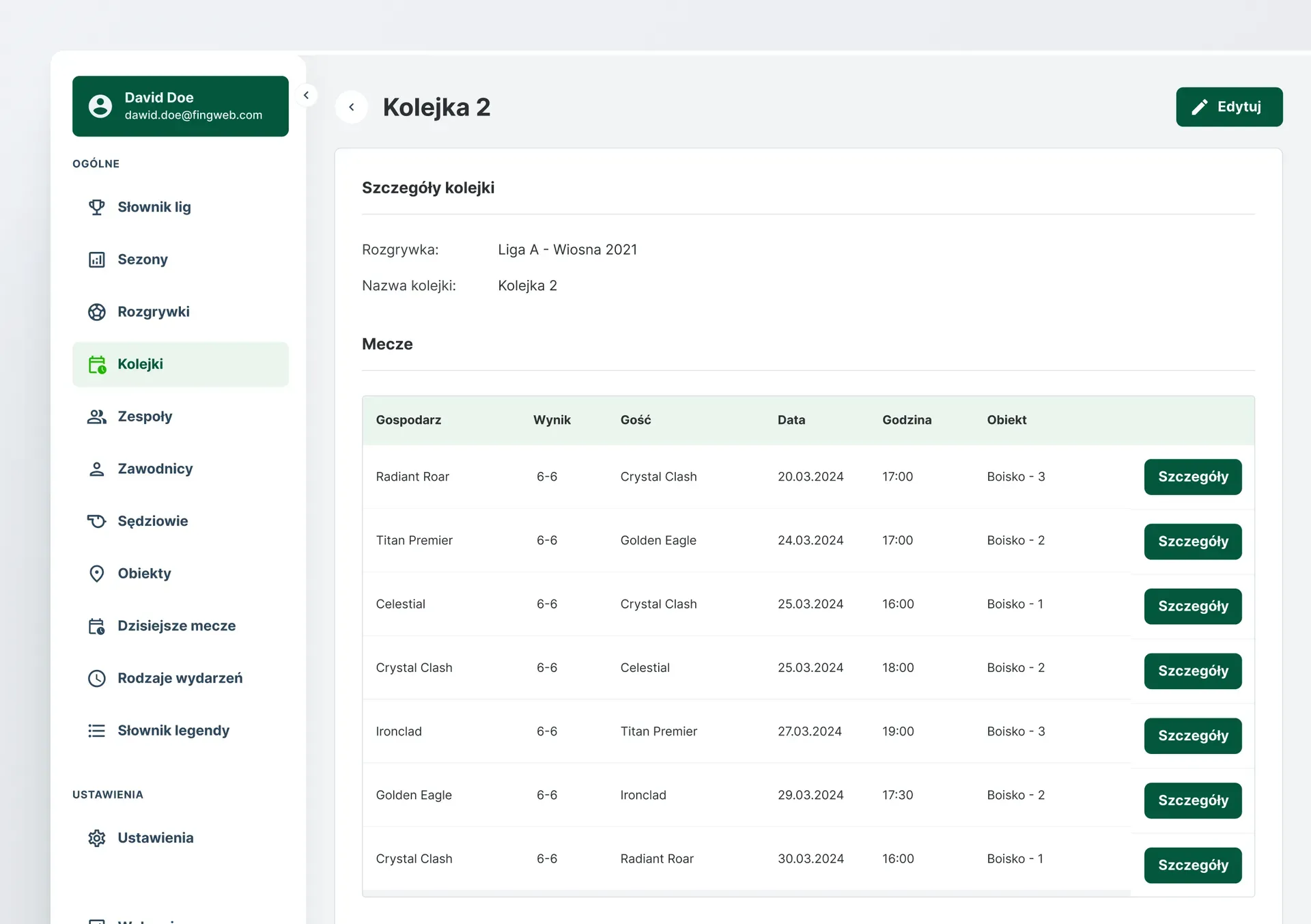
This decision determines how fair the entire league standings end up being. When a team withdraws mid-season, it leaves behind matches already played – with results, goals, and points other teams have already earned. The organizer has to decide what to do with them, and both answers used in amateur leagues come at a cost.
Cancel every match and recalculate the standings
The first option: every match the withdrawing team played, including the ones already completed, gets canceled, and the standings are recalculated as if that team had never taken part. The fairness here is that no team gains or loses points depending on whether it happened to play a weak opponent before or after the withdrawal. The cost is high: it changes every team's record in the league at once, which tends to go over badly with teams that had just beaten the withdrawing team by a wide margin.
Keep the results and record forfeits
The second option: completed matches stay in the standings unchanged, and every remaining game involving the withdrawn team gets recorded as a forfeit for the opponent, typically 3-0 or whatever value the rulebook sets. Administratively, it's simpler – nothing that already happened needs recalculating. The downside is real: it rewards teams that got to play the withdrawing team and won big, at the expense of teams whose game against it was still to come and who only get a dry forfeit instead of a real chance to score.
The decision threshold: 50% of matches played
Amateur leagues tend to work off a simple rule of thumb. If a team withdraws before playing half its season's matches, canceling usually makes more sense – there's too little data in the standings for the completed matches to count as representative. If the withdrawal comes after more than half the matches are played, more leagues choose to keep the results and record forfeits, because canceling at that point would disrupt a record built over most of the season.
Neither option is universally "better." This is a decision the organizer makes once, for the whole league, and writes into the rulebook before the season starts – not something to improvise after the first withdrawal. Canceling matches also disrupts the schedule for the remaining teams, especially in a round-robin format, where any change to one pairing shifts the balance of the entire schedule.
How do you prevent forfeits?
A forfeit costs the organizer time and ruins the season for the teams competing fairly. Rather than just regulating it in the rulebook, you can reach for tools that cut down how often withdrawals and no-shows happen. They work best combined – rarely does one alone do the job.
- Refundable deposit – a team pays a deposit before the season, for example $100-300 depending on the league, and gets it back in full if it doesn't cause a single forfeit. Of the five options, this is the strongest financial incentive, because the money is already paid in, so losing it stings more than a charge added after the fact.
- Forfeit fee – instead of an upfront deposit, the team only pays a penalty after causing a forfeit, usually in the $50-150 range. Simpler to administer, but a weaker deterrent: the penalty only lands on the team once the forfeit has already happened.
- Points deducted – the rulebook subtracts league points for causing a forfeit, separate from any financial penalty. For teams chasing the top of the standings, this hits harder than any fine, because it lands directly on their league position.
- Exclusion after the second or third forfeit – the rulebook sets a hard limit, and once a team crosses it, it's removed from the league, with its remaining matches settled under whichever option the league has chosen (cancellation or recorded forfeits).
- Roster confirmation before the round – the captain confirms the team is ready to play with a set amount of notice, for example 24-48 hours before the match, giving the organizer time to react instead of a surprise on the field on game day.
Forfeits also have a knock-on effect beyond a single round. A league where withdrawals and no-shows happen often loses teams faster than one where the season runs predictably – it's one of the factors behind keeping teams in the league season after season.
What to set in the rulebook in advance
Before the season starts, the answers to the following questions should be written into the rulebook, not improvised after the first incident.
- What score gets recorded for a forfeit (3-0, 5-0, or another value), and whether it changes by format.
- How many players count as the minimum to start a match in your league.
- Whether a forfeit for a short-handed roster is treated differently from a forfeit for a full no-show.
- Which option applies when a team withdraws: canceling matches or recording forfeits.
- Whether a refundable deposit, forfeit fee, or points deduction applies, and at what amount if so.
- After how many forfeits a team is excluded from the league.
- How much notice a team must give before a match to confirm its roster.
How FLM System handles this

Three parts of the forfeit process work differently in FLM System than you might expect at first glance, and it's worth knowing them before you set your league up in the system.
A forfeit doesn't exist as a separate result type – you enter the match normally, for example 3-0, the same way you'd enter any other result in the league. The system doesn't flag it in the standings or the stats as a "forfeit"; it just counts it as an ordinary match with whatever score you enter.
If your league's rulebook calls for an extra penalty, FLM System lets you award a team negative points – for example, deducting -2 from its tally for causing a forfeit, independent of the match score itself. That's the same mechanism as the points-deduction tool listed above among ways to prevent forfeits, except it takes a few clicks instead of recalculating the standings by hand in a spreadsheet.
When a team withdraws from the league and you choose the cancellation option for its matches, FLM System lets you cancel matches, and the standings recalculate automatically, with no manual counting of goals and points from scratch. You pick the option that matches your rulebook; the system handles the rest.
If you're running a league and want these decisions at your fingertips instead of buried in a spreadsheet, sign up for FLM System and set your forfeit rules up alongside the rest of the standings.
FAQ
What is a forfeit?
A forfeit is a win awarded to a team whose opponent fails to show up or doesn't meet the conditions to start play, for example by having too few players. Many leagues outside the US call the same thing a "walkover," a term that comes from a 19th-century horse race won by walking the course with no rival present. On the score sheet, it appears as a technical scoreline.
What score do you record for a forfeit?
The standard is 3-0 for the team that showed up ready to play, including in 11-a-side soccer. Six-a-side and seven-a-side leagues often raise it to 5-0, because with roughly double the average goals per game, 3-0 would understate the winner's goal difference. Whichever you choose, that figure feeds into goal difference and can decide where teams land in the standings, so write it into the rulebook before the first round.
How many players does it take for a match to go ahead?
Only two formats have a hard rule:
- 11-a-side soccer – below 7 players, the match doesn't start or continue (IFAB Law 3).
- Futsal – below 3 players, the match doesn't start or resume (FIFA Futsal Law 3).
9v9, six-a-side, and seven-a-side leagues have no equivalent rule – the minimum is set by each league's own rulebook, in practice usually around 3 players.
What happens when a team withdraws from the league?
The organizer picks one of two options for settling its matches so far: cancel every game and recalculate the standings, or keep the completed results and record forfeits for the remaining rounds. The usual decision threshold is half the season's matches played – below it, leagues more often cancel; above it, they more often keep the results.
Can you dock a team points as a penalty?
Yes, if the league's rulebook allows for it. A points deduction is a penalty independent of the match result, so a team could lose 0-3 in the same round and drop two further points on top. For teams chasing the top spots, that hits harder than a fine, because it lands directly on the standings. In FLM System, you award it straight from the standings settings.
How many forfeits lead to exclusion from the league?
There's no single universal threshold, but the rules most commonly seen in amateur leagues look roughly like this:
- After the first forfeit – a warning or a financial or points penalty; the team stays in the league.
- After the second forfeit – in many rulebooks, this is already the line beyond which a team loses its right to keep playing.
- After the third forfeit – a threshold used by more lenient rulebooks, usually in leagues with fewer teams, where every exclusion disrupts the schedule more heavily.
Where you set the threshold is a rulebook decision – what matters is writing it down before the season, not deciding it at the second withdrawal of the year.